
Events
EEB Seminar
October 9, 2026
How Should We Think about the Pollination Crisis? James D. Thomson (Toronto)
James D. Thomson (Toronto) is skeptical a pollinator crisis is either here or impending and will argue that scientists are not asking the right questions.
Exit Seminar
October 7, 2026
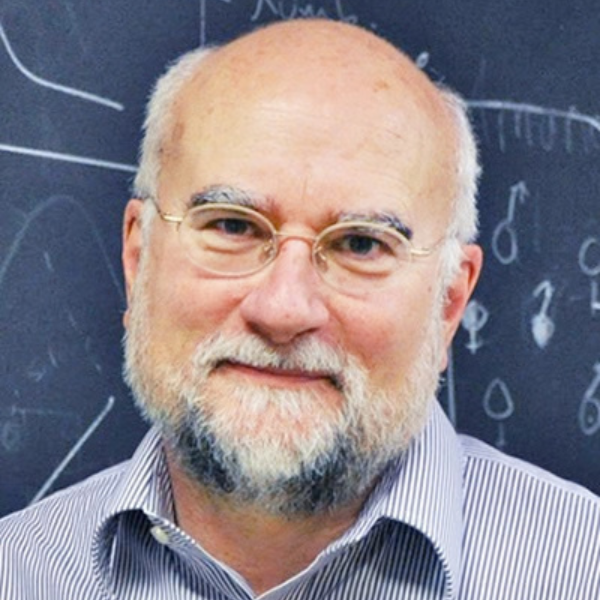
Evolutionary History of Tooth Attachment Systems in Archosauromorpha: Understanding the Origin and Ontogeny of Archosaurian Thecodonty: Gabriel Mestriner da Silva (Exit Seminar)
This PhD dissertation by Gabriel Mestriner da Silva will provide the first comprehensive evolutionary synthesis of tooth attachment across Amniota, overturning the long-standing assumption that mammals and crocodilians are unique in possessing ligamentous dentitions.

EEB Seminar
October 2, 2026
CANCELLED Proteomes as Bridges to Ecosystem Processes: Scott McCain (University of Toronto)
All ecosystems are powered by the outcomes of gene expression. In this seminar, Scott McCain will illustrate how and why the products of gene expression (proteins) shape ecosystems by controlling microbial metabolism and elemental composition.
PhD Appraisal
September 25, 2026
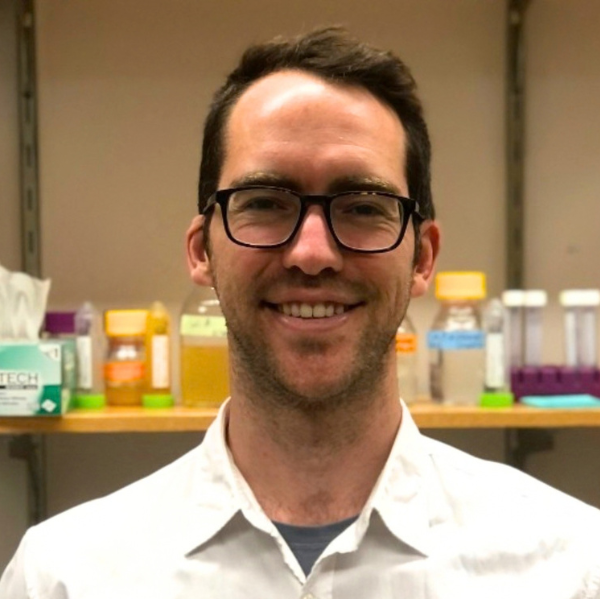
Developing an Ecological Risk-Assessment and Management Framework for Microplastics: Simran Hansra (PhD Appraisal)
In her research, Simran Hansra aims to address the assumptions present in current frameworks by filling the gaps in our knowledge, specifically regarding mechanisms of microplastic toxicity, toxicity test guidelines, and standardizing microplastic concentrations. Ultimately, Hansra will synthesize her findings to present a more informed risk-assessment framework for microplastics.
EEB Seminar
September 25, 2026
Many Weapons, Many Warnings: Exploring Effector Diversity in Bacterial Plant Pathogens: Marcus Dillon (University of Toronto)
Marcus Dillon will talk about how bacterial pathogens pose a serious threat to global food security and human health. One critical virulence apparatus that pathogens deploy is the type III secretion system. The diverse effectors that are delivered by this system mediate the outcomes of host-pathogen interactions because they can either promote pathogenesis on susceptible hosts or activate an immune response on resistant hosts.
Exit Seminar
September 22, 2026
Understanding How Mutation Shapes Trait Variation in Chlamydomonas reinhardtii : Eniolaye Balogun (Exit Seminar)
Mutation is the ultimate source of genetic variation and provides the fuel for evolutionary change through natural selection and genetic drift. Despite its central role in evolution, our ability to predict how traits evolve in the presence of mutational input remains limited. This uncertainty stems largely from an incomplete understanding of both the magnitude of […]
PhD Appraisal
September 18, 2026
Coinfection, Aquaculture, and Community Composition: Factors Affecting the Migration and Population Ecology of Fraser River Sockeye: Erik Curtis (PhD Appraisal)
The productivity of the sockeye salmon stocks that spawn in British Columbia’s Fraser River has been declining for decades. In particular, the early marine residence period has been identified as critical for the productivity of individual sockeye populations. There are several potential factors driving this reduction in marine survival—including warming ocean temperatures, increased competition in […]
PhD Appraisal
September 18, 2026
Socio-eco-evolutionary Dynamics of Urban Cockroaches: Mia Akbar (PhD Appraisal)
In 2026 it is well established that urbanization can alter the ecology and evolution of non-human organisms and is often associated with substantial biodiversity loss. However, not all species are negatively affected by urbanization. Some are known to thrive in cities and are even specialized to urban environments, including indoor pests such as cockroaches. Despite […]
EEB Seminar
September 18, 2026
Putting Complex Trait Genetics in Context: Arbel Harpak (University of Texas, Austin)
Arbel Harpak, an evolutionary and statistical geneticist, is an assistant professor of Population Health and Integrative Biology at the University of Texas, Austin, and an affiliate faculty at the Oden Institute of Computational Engineering and Sciences. He is also a Pew Scholar in the Biomedical Sciences. He works primarily on human data sets and has examined methods […]
Master’s Exit Seminar
September 11, 2026
Unravelling the Function of Courtship Colour Change in Male Poecilia reticulata: Abigail Turner (Master’s Exit Seminar)
While early research in evolutionary ecology focused on the adaptive functions of static colouration, new studies on dynamic colour change have suggested that its role in signaling and communication may be more widespread than previously thought. The Trinidadian guppy (Poecilia reticulata) has long been used as a model system to investigate the origins and signalling […]
Atwood Colloquium in Ecology & Evolution
This special two-day event provides a fantastic opportunity to learn about the most exciting research in ecology & evolution being done at U of T and abroad.
Broadening Representation & Equity With Science (BREWS)
We promote inclusion and equity through community-building tea breaks and data-driven discussions. We are always looking for speakers & ideas for discussions, so please get in touch!
Conservation Science Group
The EEB Conservation Group is a collaboration of undergrad & grad students, postdoctoral researchers and faculty interested in conservation science.
Seminars in other departments
- UTM Biology
- UTSC Biological Sciences
- Emerging Pathogens & Infectious Diseases Consortium (EPIC)
- Centre for Global Change
- Department of Cell & Systems Biology
- Department of Medical Biophysics, Faculty of Medicine
- School of the Environment
- Institute for the History and Philosophy of Science and Technology
- Schwartz Reisman Institute for Technology & Society